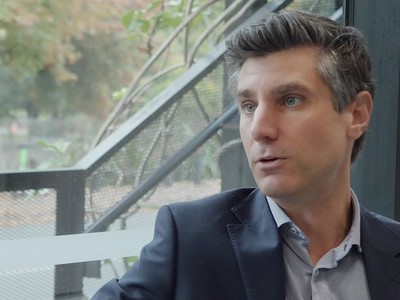
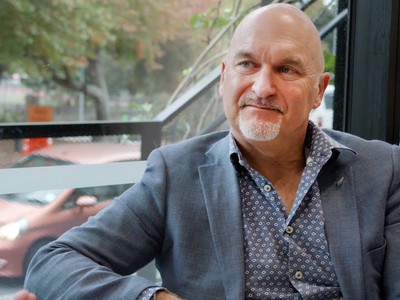
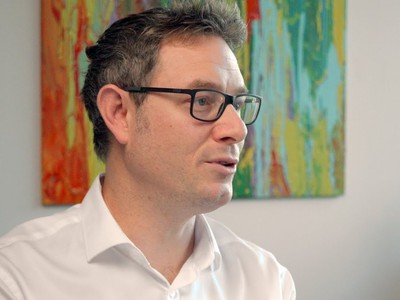
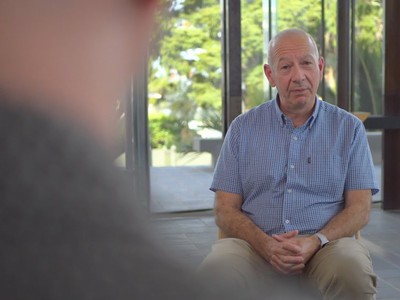
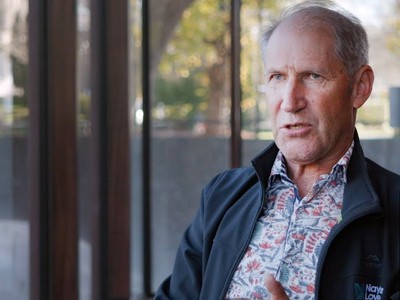
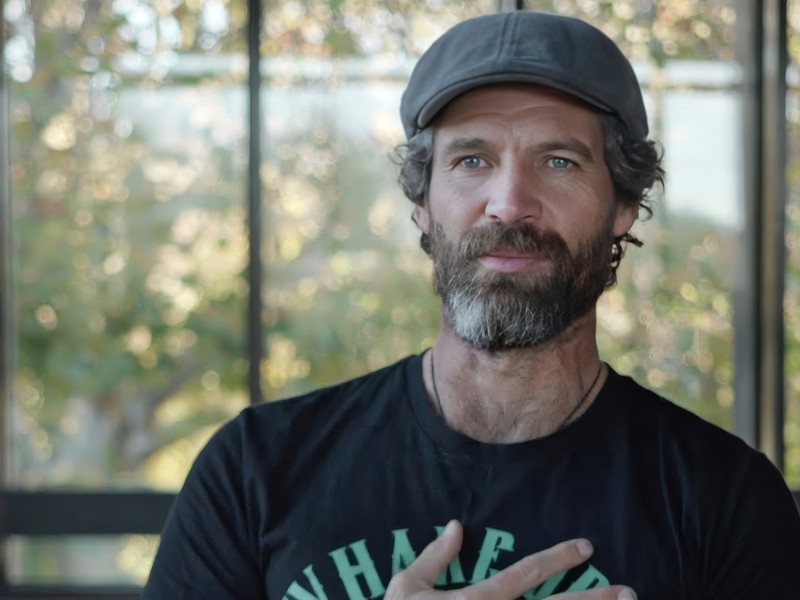
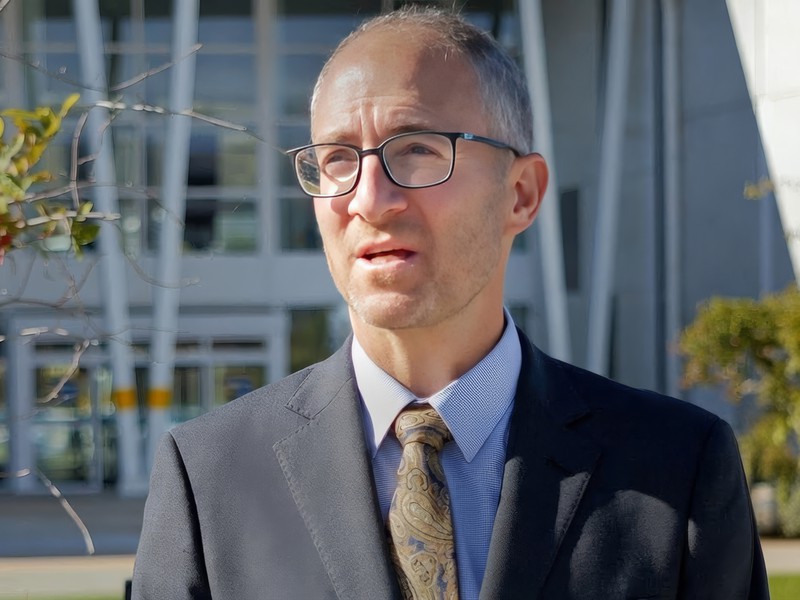
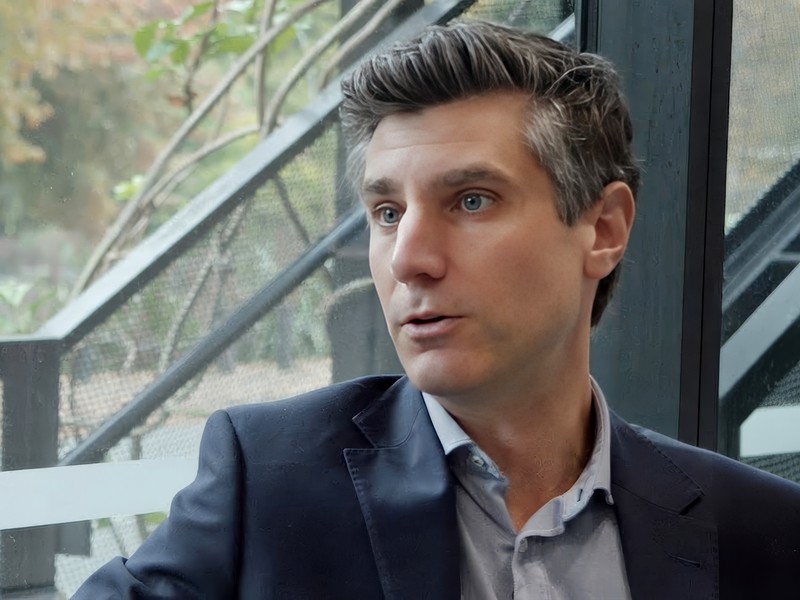
Meet the team: Chris Glaudel
From California to Aotearoa
In a sector dedicated to providing stable and affordable housing for all New Zealanders, Chris Glaudel brings a wealth of international experience and a unique perspective to his leadership role as Deputy CEO at Community Housing Aotearoa. His journey from California to Aotearoa spans decades of work in housing development, asset management, and community-focused initiatives.
Early life
Though born in Iowa, Chris grew up in California — first near Los Angeles and later in Bakersfield, a region immortalised in The Grapes of Wrath. Here, Chris developed an appreciation for diverse communities and economic realities.
Initially drawn to the sciences, he eventually majored in history at Fresno State University, developing skills in critical thinking and communication. Even in middle school, he showed an interest in international affairs — subscribing to U.S. News and World Report while his brother read Sports Illustrated.
A formative international experience
After university, Chris joined the U.S. Peace Corps. Although initially posted to Ghana, he opted for a role where he could learn a foreign language and was sent to Mauritania, in Northwest Africa.
There, he worked on an afforestation project in a village of about a dozen families. When the Gulf War began, the programme was suspended. Rather than returning home, Chris transferred to Cameroon, where he continued his service in the tropical highlands — a stark contrast to Mauritania's desert environment.
"It was a wonderful experience to see the world not as a tourist, but as someone living alongside the people I was working with," he reflects. "It was grounding, and made me reflect on how different life can be depending on the lottery of birth."
The path to housing
Back in California, Chris enrolled in an MBA at UC Davis, specialising in environment and resource management. His time in the Peace Corps convinced him that business development, not just aid, was key to improving people's lives.
After graduating, he joined Rural California Housing Corporation, a non-profit focused on mutual self-help housing and rental development. "It wasn't a deliberate decision to get into housing," he says. "It was more about applying business skills for community good."
Building a career in California
Chris started as a project manager overseeing subdivision and rental housing developments — learning finance, contracts, and tax credit systems. He later led the development team, managing multiple project managers, and helped the organisation merge with Mercy Housing California — a national provider backed by 13 religious congregations.
Later, he transitioned to asset management, overseeing a portfolio of 120 properties across California — around 5,000 apartments. These homes served a range of tenants: elderly residents, working families, and people facing housing barriers.
Eventually, he supported Mercy Housing teams in Washington, Colorado, Arizona, and Utah, gaining a national perspective on housing challenges.
Bringing global experience to Aotearoa
Now in a senior role at Community Housing Aotearoa and running a consulting practice, Chris draws heavily on his American experience in both housing development and asset management.
He often quotes Sister Lillian Murphy, former CEO of Mercy Housing: "There is no mission without the business."
"It's not either-or," he says. "If we don't have good business discipline — if we're not collecting rents, paying bills, or investing in our homes — then we can't serve the people we're here to support." This practical philosophy helps him engage effectively with New Zealand's diverse housing organisations — from small volunteer trusts to large-scale providers.
Challenges in New Zealand
Chris sees several structural issues in Aotearoa's housing market. Certainty in pricing, consenting, and infrastructure is foundational — but funding certainty is also critical.
In contrast to the US, where the Low Income Housing Tax Credit Program has operated steadily since 1986, New Zealand's approach has been stop-start. Chris cites discontinued initiatives like the Housing Innovation Fund and Social Housing Fund as examples of how gaps in funding forced providers to let go of experienced staff, disrupting progress.
A nation of relationships
Despite the challenges, Chris sees huge potential in New Zealand's greatest asset: its tight-knit communities. Moving from California's 30 million people to a nation of just over five million underscored the power of relationships.
"I think the strength here is in relationships. That's how we'll progress," he says.
He highlights the MAIHI Ka Ora strategy and Whai Kāinga Whai Oranga funding programme as successful examples of Māori-Crown partnership. "Māori, iwi, hapū bring that long-term view. That aligns with the mindset I had in California — thinking in terms of stewardship and perpetuity."
This long-term lens is what distinguishes the community housing sector from private development and points to a more sustainable housing future.
Looking ahead: risks and priorities
Asked what he would change with a magic wand, Chris calls for long-term investment in housing that values social outcomes: "Better education, health, economic participation, and social connection — we know these come from secure housing. But we don't always make policy choices that reflect that."
He warns against treating housing purely as an investment vehicle, which promotes inequality. He's especially concerned about Māori and Pasifika households facing rising rents, declining home ownership, and retirement without assets.
Recent research he contributed to revealed that of 600,000 renter households in Aotearoa, nearly 194,000 spend over 30% of their income on rent — 88,000 of them spend over 50%. These households often face impossible trade-offs between heating, healthcare, and children's opportunities.
With most having just $5,000–$10,000 in net wealth, a single setback — like a car repair or illness can destabilise them. Chris sees this as a warning sign of an eroding safety net: "We're losing that certainty that we'll be looked after in old age, even after contributing to society."
Progress and foundations
Chris welcomes the Government's support for the Community Housing Funding Agency and the new credit facility. These are the results of years of groundwork — including efforts led by former CHA Chief Executive Scott Figenshow.
Between 2014 and 2016, Chris and partners like Auckland Council worked to establish what became Community Housing Solutions (originally New Zealand Housing Bonds Ltd). Though early versions didn't succeed, the vision persisted.
"In 20 years, people will look back and recognise this as foundational for long-term community housing growth," he says.
Building for the future
Looking forward, Chris sees a need to better utilise the more than $4 billion New Zealand spends annually on housing — redirecting from rent subsidies toward building and retaining affordable housing assets, especially under Māori and non-profit ownership.
In the US, failure to preserve subsidised housing led to a crisis in the 1990s. Chris warns New Zealand not to repeat that mistake. "If government is subsidising it, then the housing should remain affordable. That means ownership by registered charities and community trusts."
Chris's work is driven by a deep belief in housing as the foundation for wellbeing. His time in Mauritania, witnessing a society shift from 80% nomadic to 80% settled in one generation, challenged his thinking about home and stability.
His own upbringing in a stable, home-owning family stood in contrast to peers who moved often. That contrast shaped his career. Combined with the chance to work across finance, planning, design, and policy, and to meet people committed to change. Housing became more than a job — It became a mission.